Category: Technology

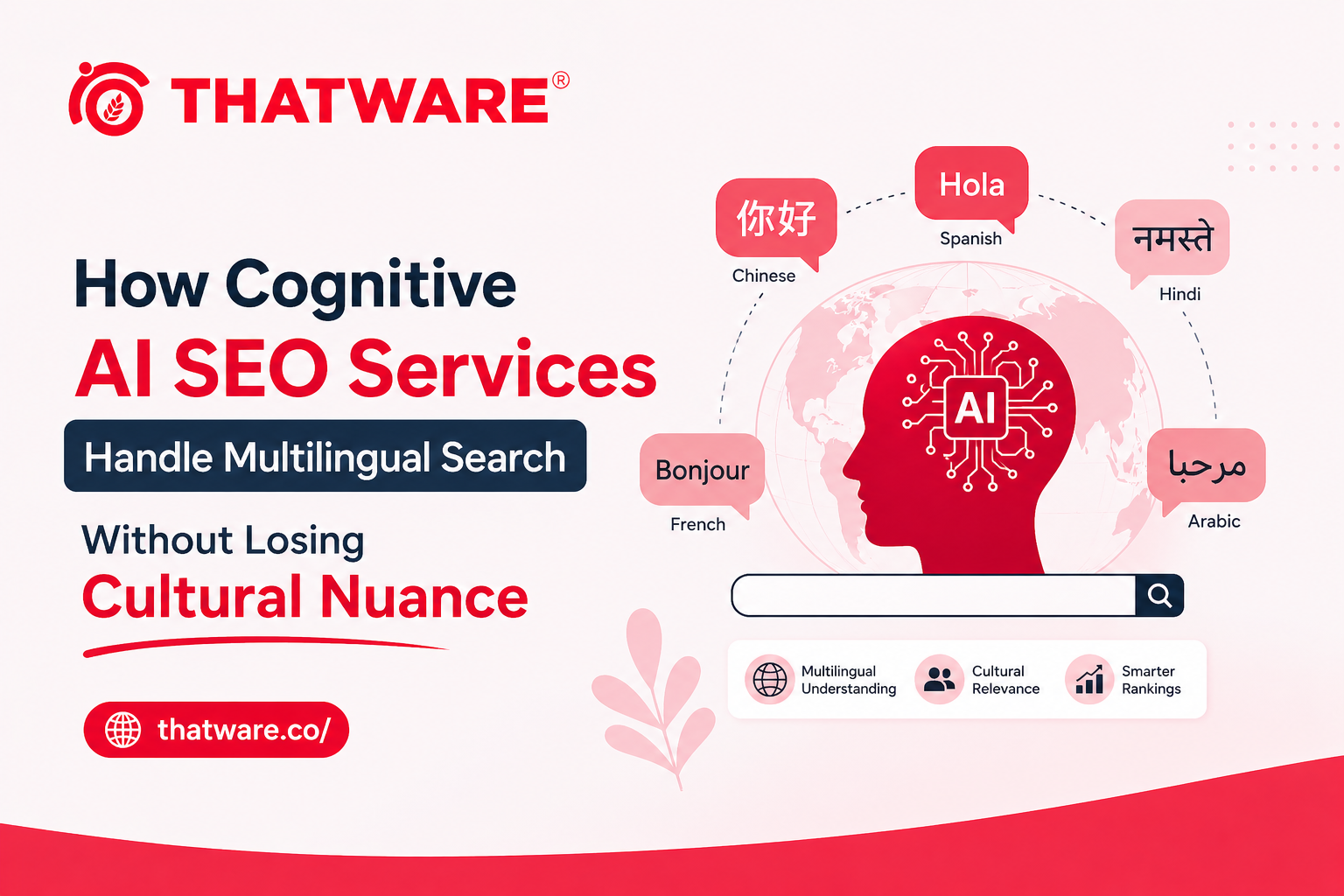
  • How Cognitive AI SEO Services Handle Multilingual Search Without Losing Cultural Nuance

    How Cognitive AI SEO Services Handle Multilingual Search Without Losing Cultural Nuance

    Here’s a scenario that plays out regularly in global brands: the SEO team produces excellent English content that performs well in US and UK markets. The order comes from leadership to expand into three European markets. The content gets translated. The translated content gets published. Six months later, the European markets are underperforming – lower rankings, lower engagement, lower conversion – and the diagnosis is “SEO needs more work.”

    The diagnosis is right. The understanding of what kind of work is usually wrong.

    The problem is almost never the SEO mechanics – the hreflang, the URL structure, the keyword research in each language. Those might be done adequately. The problem is what happens when content that was written for one cultural and cognitive context gets transferred – through translation – into a different cultural and cognitive context where it doesn’t quite fit. Readers in that market experience something subtly off. They engage less. They convert less. The behavioral signals reflect that, and rankings reflect the behavioral signals.

    Cognitive AI SEO for multilingual markets addresses this at the level where the problem actually lives.

    Why Translation Creates a Cultural Fit Gap

    Language and culture are inseparable in ways that translation doesn’t address. When content is written in English for an American audience, it embeds dozens of assumptions that American readers don’t notice because those assumptions are shared. The examples chosen resonate with American professional or consumer experiences. The rhetorical structure follows conventions that American readers find naturally persuasive. The level of directness, the relationship between writer and reader implied by the prose, the implicit understanding of what “doing your research” means – all of these are culturally specific.

    When that content is translated accurately into German, the words are correct but the cultural fit is approximate. German professional audiences have different expectations for how expertise gets demonstrated – they tend to expect more depth, more technical precision, more acknowledgment of complexity than American content typically provides. German readers are more likely to read thoroughly and scrutinize claims. The direct-benefit-first American content structure often feels superficial or insufficiently rigorous by German standards.

    Japanese audiences have radically different expectations around content structure – indirect approaches to main points, collective perspective rather than individual authoritative voice, different visual and information density norms. Content written in Japanese that’s been translated from American English doesn’t just read awkwardly; it reads as culturally foreign in ways that undermine trust.

    What Cognitive AI SEO Brings to This Problem

    Cognitive ai seo services applied to multilingual search address the cultural fit problem by working at the cognitive layer – how readers in each market process information, what persuasion conventions they respond to, what content structures feel authoritative versus superficial in each cultural context.

    This means content strategy for each target market that starts from the cognitive norms of that market rather than from the source content. Not “how do we adapt this content for Germany” but “what content would a German reader find genuinely authoritative and useful on this topic, and how do we produce that?”

    The difference is directional: adaptation starts from the source and moves toward the target market. Cognitive-native content strategy starts from the target market and builds toward the content that will actually work there. The outputs are different, and the performance gap is substantial.

    AI Search Adds Another Layer of Complexity

    Multilingual cognitive SEO has always been important for human reader engagement. AI search adds a layer that makes it more urgent.

    When AI systems are trained on multilingual content, they absorb not just linguistic patterns but cultural context. A German-trained AI system has learned what authoritative German-language content looks like – the depth, the structure, the evidence density, the rhetorical conventions. When evaluating whether a piece of German-language content is worth citing in an AI-generated answer, it’s applying an implicit model of German content quality.

    Content that’s been translated from English rather than written natively in German often fails this evaluation – not because of translation errors, but because the underlying cultural and cognitive structure is wrong. The AI system recognizes it as not-quite-right in the same way a German reader would.

    Intelligent seo services building AI-visible content in multilingual markets need to produce content that’s credible to both human readers and AI evaluation systems in each target language. That requirement raises the bar above translation-based approaches to a level where native-language content creation is often the only way to meet it.

    The Practical Architecture for Cognitive Multilingual SEO

    What does a proper cognitive multilingual SEO architecture actually look like?

    It starts with market-specific research, not source content adaptation. What are the actual queries – in natural, native-language form – that people in this market are asking? What content currently satisfies those queries best, and what are its structural and cultural characteristics? This research requires genuine language capability, not keyword tool localization.

    It involves native-language content strategy, not translation. The brief for a German content piece is written by someone who understands both the SEO objectives and the German-language content norms. The content is created in German as the primary language, not translated from English.

    It includes cultural accuracy review – someone with deep familiarity with the target market reviewing not just linguistic accuracy but cultural fit. Are the examples right? Is the persuasion structure appropriate? Does the depth and specificity meet the market’s expectations?

    It incorporates market-specific entity building – the off-site authority signals in each language market that make the brand recognizable as a credible source to both human readers and AI systems. German-language trade publications. French industry associations. Japanese consumer review platforms. Each market has its own authority ecosystem.

    Measurement That Reveals Cultural Fit

    Measuring whether multilingual content is working at the cultural fit level requires more than traffic and ranking metrics. Engagement metrics – time on page, scroll depth, return visit rate, direct navigation from branded search – provide behavioral signals that reflect whether content is genuinely resonating with readers in each market.

    Comparing engagement metrics between the English-language version and each translated or localized version of similar content reveals where cultural fit gaps exist. Consistently lower engagement in a specific market, on content that’s ranking adequately, points to a content quality or cultural fit problem rather than a visibility problem.

    Fixing a cultural fit problem with more SEO work – more keywords, more links – doesn’t work. It addresses the wrong layer. Fixing it requires going back to the content itself and producing something that actually fits the cognitive and cultural context of the market you’re trying to serve. That’s a more expensive fix than getting it right from the beginning. It’s also almost always the problem that’s limiting multilingual SEO performance when the mechanics are otherwise in place.


  • Harnessing Clean Energy with a Solar Power System

    Harnessing Clean Energy with a Solar Power System

    As the world becomes increasingly conscious of environmental sustainability, the demand for clean and renewable energy sources is soaring. Among the most popular alternatives to fossil fuels is the solar power system, a technology that harnesses energy from the sun and converts it into electricity or heat. Whether for residential, commercial, or industrial use, solar power is emerging as a game-changer in the global energy landscape.

    What is a Solar Power System?

    A solar power system refers to the complete setup required to capture and convert sunlight into usable energy. The core components typically include solar panels (also called photovoltaic or PV panels), an inverter, batteries (for storage), a charge controller, and wiring. These elements work together to transform solar radiation into electricity that can power homes, businesses, and even entire communities.

    There are two primary types of solar power systems:

    1. Grid-Tied Systems: These systems are connected to the main electricity grid. Excess energy produced can be fed back into the grid, often earning credits through net metering. When the solar panels are not producing enough energy, power is drawn from the grid.
    2. Off-Grid Systems: These operate independently from the electricity grid and rely on battery storage. Ideal for remote or rural areas, off-grid systems provide complete energy independence.
    3. Hybrid Systems: A combination of both grid-tied and off-grid, hybrid systems offer maximum flexibility. They use solar energy when available, store surplus in batteries, and draw from the grid when necessary.

    Benefits of Installing a Solar Power System

    1. Cost Savings:
    Once installed, a solar system significantly reduces monthly electricity bills. While the upfront cost may seem high, the long-term savings and return on investment make it a financially sound choice.

    2. Environmentally Friendly:
    Solar energy is a clean and green source of power. It helps reduce carbon emissions, air pollution, and reliance on fossil fuels. This contributes positively to combating climate change and preserving the planet.

    3. Energy Independence:
    By generating their own electricity, individuals and businesses can reduce or eliminate their dependence on utility companies. This is especially beneficial during power outages or fuel price fluctuations.

    4. Low Maintenance:
    Solar systems require minimal maintenance. Panels need occasional cleaning and an annual inspection, but most components are durable and have a long life span, often exceeding 25 years.

    5. Increased Property Value:
    Homes and buildings equipped with solar energy systems often see a boost in market value. Buyers are increasingly interested in properties that come with energy-efficient upgrades.

    How to Choose the Right Solar Power System

    Choosing the right system depends on several factors including location, energy needs, budget, and available space. A professional installer will typically conduct a site assessment to determine the system size and orientation for optimal performance.

    Key considerations include:

    • Sunlight availability: Areas with more sunlight throughout the year will generate more energy.
    • Roof orientation and space: South-facing roofs with minimal shading are ideal.
    • Energy consumption patterns: Understanding your monthly and yearly usage helps determine the required system capacity.
    • Budget and incentives: Look for government subsidies, tax credits, and financing options to reduce the initial investment.

    Future of Solar Energy

    The solar energy industry is continuously evolving with technological advancements. Innovations such as high-efficiency panels, smart inverters, solar tracking systems, and improved battery storage are making solar systems more accessible and efficient. With decreasing costs and increasing awareness, solar adoption is expected to accelerate globally.

    Investing in solar power system solutions today ensures a sustainable and cost-effective future tomorrow.

    Conclusion

    Switching to a solar power system is more than a trend—it’s a responsible step toward a cleaner and more resilient energy future. By harnessing the power of the sun, individuals and businesses can cut costs, reduce their carbon footprint, and contribute to a healthier planet. Whether you’re aiming for full energy independence or simply want to lower your electricity bills, solar energy offers a practical and impactful solution.

  • Improving Customer Retention with AI-Powered Email Campaigns

    Improving Customer Retention with AI-Powered Email Campaigns

    In the competitive business world, customer retention is one key to long-term success. One effective strategy to increase customer retention is through personalized email campaigns. With the advancement of technology, artificial intelligence (AI) has played a significant role in optimizing email campaigns. This time, we will discuss how AI can increase customer retention through email campaigns.

    Understanding Customer Retention

    Customer retention is the ability of a company to keep existing customers to continue using their products or services. An effective retention strategy can increase customer loyalty, reduce churn rates, and increase company revenue.

    The Role of Email in Customer Retention

    Email is one of the most effective communication tools to interact with customers. A well-designed email campaign can help to have relationships with customers, provide relevant information, and remind them of the value of the product or service offered.

    Advantages of AI in Email Campaigns

    AI can analyse big data and identify customer behaviour patterns. By using AI, companies can create more targeted and relevant email campaigns. Some advantages of AI in email campaigns include personalization, predicting customer behaviour, and automation.

    Personalization with AI

    AI lets companies send personalized emails based on customer preferences and behaviour. By analysing historical data, AI can recommend relevant products, offer relevant discounts, and deliver content that appeals to each individual customer.

    Customer Behaviour Prediction

    One strength of AI is its ability to predict customer behaviour. With predictive analytics, AI can identify customers at risk of churn and take proactive steps to keep them. For example, sending emails with special offers or reminding them of product benefits.

    Email Campaign Automation

    AI enables more sophisticated automation of email campaigns. Companies can set up email workflows that automatically send messages based on customer actions or inactivity. This automation not only saves time but also makes sure customers receive the right message at the right time.

    Analytics and Reporting

    AI can provide in-depth analytics and reporting on the performance of email campaigns. With this data, companies can understand what is working and what needs to be improved. This information is invaluable for optimizing future email campaigns and increasing the effectiveness of retention strategies.

    Starting AI in Email Campaigns

    Many companies have successfully increased customer retention by using AI in their email campaigns. For example, an e-commerce company uses AI to analyse customer shopping behaviour and send personalized product recommendations. They saw a significant increase in retention and sales.

    The Future of AI in Email Campaigns

    The future of AI in email campaigns is promising. As technology continues to advance, AI will become more capable of understanding customer behaviour and delivering more personalized and relevant experiences. Companies able to leverage AI effectively will have a competitive advantage in keeping their customers.

    Conclusion

    Using AI in email campaigns is a highly effective strategy for increasing customer retention. With the ability to personalize messages, predict customer behaviour, and automate workflows, AI helps companies have strong relationships with their customers. While there are challenges in implementation, the benefits of AI far outweigh the challenges. As AI technology continues to advance, the future of email campaigns will become more sophisticated and effective in keeping customers. For further information about AI email marketing, you can visit AiForEveryone website. This platform offers comprehensive reviews and insights into various AI tools and their applications in email marketing. It is a reliable resource for both beginners and experienced marketers looking to enhance their strategies with AI technology. Visit the website to stay updated with the latest advancements and make the most of AI in your email marketing efforts.

  • Discover the Best in Printing Technology: An In-Depth QIDI MAX3 3D Printer Review

    Discover the Best in Printing Technology: An In-Depth QIDI MAX3 3D Printer Review

    In the ever-evolving world of printing technology, both 2D and 3D printers have become integral tools for various applications. From everyday document printing to creating intricate three-dimensional objects, these machines offer diverse functionalities. In this article, we’ll explore the realm of 2D and 3D printers, focusing particularly on the qidi max3 3d printer review to showcase why this model stands out in the competitive market of 3D printing.

    The Evolution of Printing Technology

    2D Printers have been a staple in offices and homes for decades, offering solutions for printing documents, photos, and graphics. They primarily include:

    Inkjet Printers: Known for their vibrant color reproduction and versatility, inkjet printers use liquid ink to produce high-quality images and text. They are ideal for users who need to print photos or graphics with rich colors and fine details.

    Laser Printers: Utilizing toner and laser technology, laser printers are renowned for their speed and efficiency. They produce sharp text and clear images, making them perfect for high-volume printing tasks in professional settings.

    All-in-One Printers: Combining printing, scanning, copying, and sometimes faxing capabilities, all-in-one printers offer versatility and convenience. These devices are especially beneficial in home offices or small businesses where multiple functions are required.

    On the other hand, 3D Printers represent a significant advancement, allowing users to create three-dimensional objects from digital models. These printers use various technologies, including:

    Fused Deposition Modeling (FDM): The most common 3D printing technology, FDM involves melting plastic filaments and depositing them layer by layer. This method is cost-effective and versatile, suitable for producing prototypes, functional parts, and creative models.

    Stereolithography (SLA): SLA uses a laser to cure liquid resin into solid layers, producing high-precision parts with smooth finishes. It is ideal for applications requiring fine details, such as intricate prototypes and detailed jewelry.

    Selective Laser Sintering (SLS): SLS involves using a laser to fuse powdered materials into solid objects, allowing for complex geometries and durable parts. This technology is often employed in industrial applications and advanced prototyping.

    Spotlight on the QIDI MAX3 3D Printer Review

    Among the various 3D printers available, the QIDI MAX3 has garnered attention for its impressive features and performance. Here’s a detailed QIDI MAX3 3D printer review that highlights why this model is a standout choice:

    1. Superior Print Quality

    The QIDI MAX3 excels in delivering high-quality prints with remarkable detail. Utilizing advanced motion systems and precision extrusion technology, this printer ensures accurate and consistent results. Whether you’re creating detailed prototypes or complex designs, the QIDI MAX3 provides impressive print fidelity, making it a reliable choice for both professionals and hobbyists.

    2. Generous Build Volume

    One of the key features of the QIDI MAX3 is its expansive build volume. This generous print area allows users to create larger objects or multiple smaller items simultaneously. The ample space is particularly advantageous for producing sizable prototypes, custom parts, or intricate designs that require more room.

    3. Dual Extrusion Capability

    The QIDI MAX3 supports dual extrusion, a feature that sets it apart from many other 3D printers. Dual extrusion allows for printing with two different materials or colors at the same time. This capability is ideal for creating complex parts with mixed materials or multi-colored models. The ability to use dual extrusion expands the creative possibilities and versatility of the QIDI MAX3.

    4. User-Friendly Interface

    Equipped with an intuitive touchscreen interface, the QIDI MAX3 makes operation and navigation straightforward. Users can easily access settings, start prints, and monitor progress with just a few taps. This user-friendly interface is designed to enhance the printing experience, making it accessible for both beginners and experienced users.

    5. Robust Performance and Reliability

    The QIDI MAX3 is built for durability and reliable performance. Its robust construction ensures consistent operation, making it suitable for both continuous use in professional settings and occasional use by hobbyists. The printer’s stability and durability contribute to its long-term value and dependability.

    6. Versatile Material Compatibility

    The QIDI MAX3 offers compatibility with a wide range of filament materials, including PLA, ABS, PETG, and more. This versatility allows users to experiment with different materials to achieve specific properties such as strength, flexibility, or durability. The printer’s ability to handle various filaments expands its applications and creative potential.

    7. Efficient Printing Speed

    Designed for efficiency, the QIDI MAX3 delivers fast printing speeds without compromising on quality. Its optimized motion system contributes to quicker production times, which is beneficial for users who need to complete projects swiftly or handle high-volume printing tasks.

    8. Advanced Features

    The QIDI MAX3 integrates several advanced features, such as automatic bed leveling and power recovery functions. Automatic bed leveling ensures a consistent and accurate first layer, while the power recovery function allows the printer to resume printing after a power outage, minimizing potential interruptions and material waste.

    Conclusion

    The world of printing technology continues to evolve, offering innovative solutions for both 2D and 3D printing needs. While 2D printers remain essential for traditional tasks, 3D printers like the QIDI MAX3 represent a leap forward in creating detailed and functional objects. The QIDI MAX3 3D printer review highlights its superior print quality, generous build volume, dual extrusion capabilities, and user-friendly features, making it a valuable addition to any 3D printing setup.

    Explore the possibilities offered by modern printing technology and see how the QIDI MAX3 can elevate your 3D printing experience. With its advanced features, robust performance, and versatility, the QIDI MAX3 is an excellent choice for enthusiasts and professionals alike.